



Our Support for Communities in Nepal and on the Tibetan Plateau
We will continue to update this page with additional resources Dear Mountain Sentinels community, Our hearts are with the people of the Tibet-Nepal border [...]


International Mountain Day 2025: Reflections from Hatun Tinkuy to Honor Glaciers, Water, and Ancestral Knowledge
On International Mountain Day and in the spirit of this UN International Year of Glaciers' Preservation, we are excited to share a short video from our latest Moving Mountains Summit.
Our Support for Communities in Nepal and on the Tibetan Plateau
We will continue to update this page with additional resources Dear Mountain Sentinels community, Our hearts are with the people of the Tibet-Nepal border area and downstream who were impacted by the tragic floods that [...]
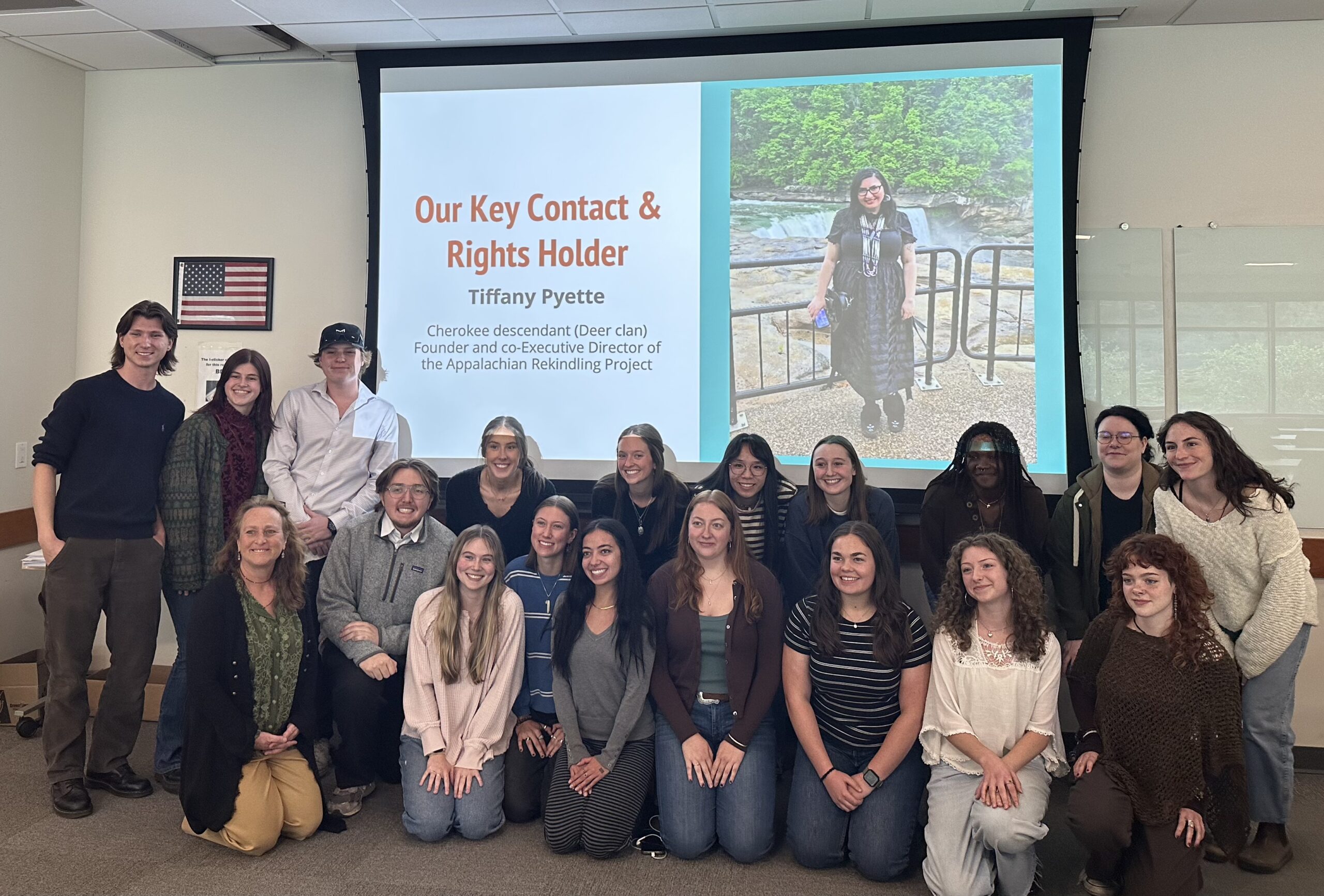
Appalachian Rekindling Project Collaborates with CSU Students on ESS Senior Capstone Projects
ARP’s Tiffany Pyette provided strong guidance and mentorship to students in Julia Klein’s capstone course this spring, working on projects related to the organization’s mission and ongoing initiatives.
By: Linnea Harris
During the final week of Colorado State University’s spring semester, students filed into Dr. Julia Klein’s Ecosystem Science and Sustainability 440: Practicing Sustainability class. Even bogged down by looming deadlines and final exams, the mood among the students was celebratory as they prepared to present their senior capstone projects. Four of those projects were in partnership with the Appalachian Rekindling Project – a Mountain Sentinels partner – and Tiffany Pyette, a 2020 Mountain Sentinels Fellow. One by one, the groups shared the collaborative work they’d done that semester with one another.
Pyette lives in Pikeville, Kentucky and is the founder and co-executive director of the Appalachian Rekindling Project: an intertribal organization led by her and Taysha DeVaughn. They engage in Indigenous, women-led land restoration work and rematriation, which includes bringing back bison native to the region and engaging in land-back work. “For all of us involved, whether it’s in leadership or in the volunteer base, everybody knows that Native land should be back in native hands, point blank,” said Pyette. They own and take care of land – some of which was gifted, and some purchased by ARP – in Kentucky, Virginia, and West Virginia. Their land-back work is achieved in both the traditional and a more abstract sense, she explained: the organization purchased land in Kentucky, for example, to block the construction of a federal prison. “So we’re taking care of that land, and we’re also standing in resistance against things we don’t want to come in.”
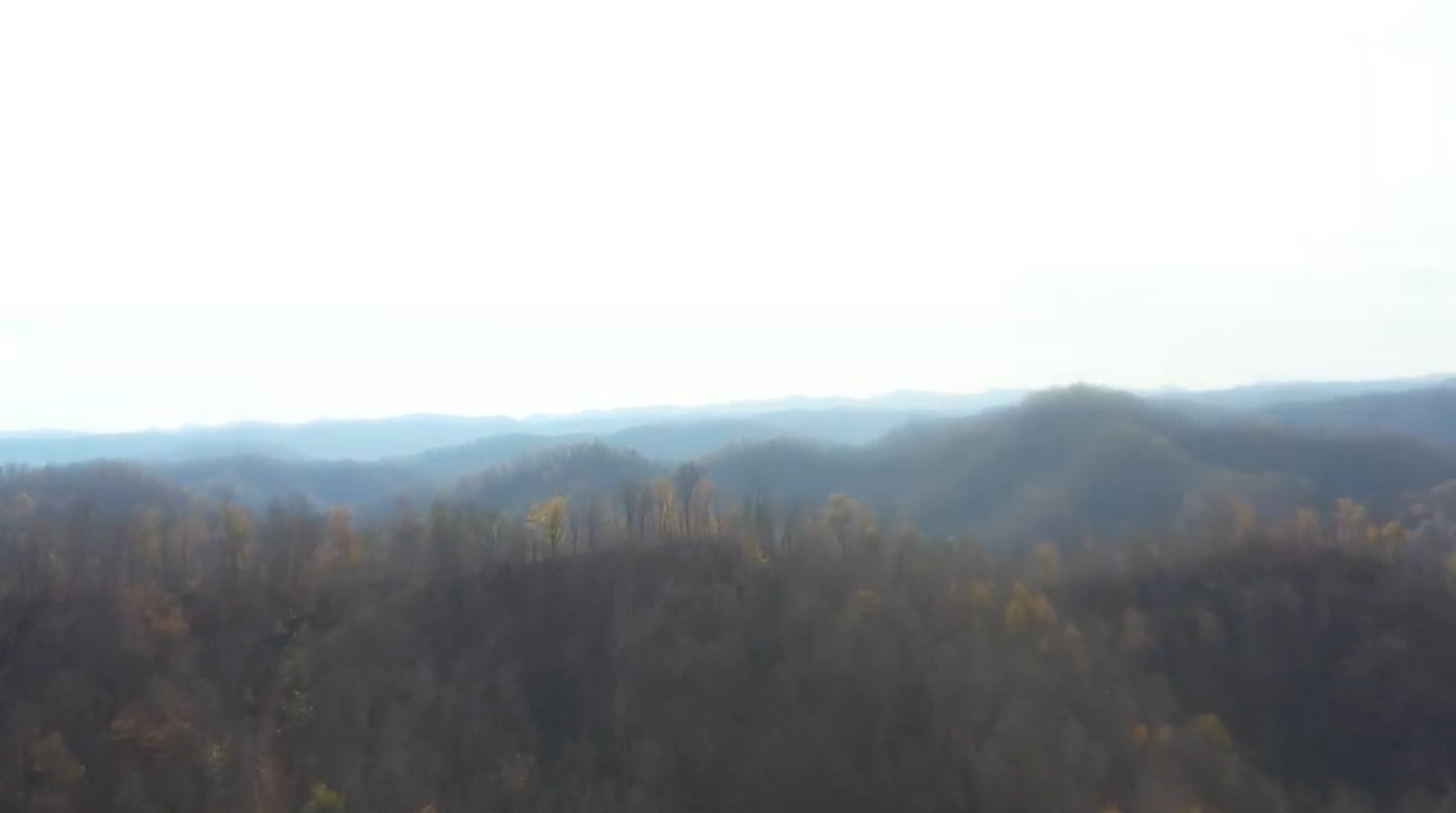
Drone footage of ARP land (credit: Jared Hamilton)
Klein’s students’ had the opportunity to work with and learn from Tiffany throughout the spring semester as they completed their projects. Their research was diverse in scope, touching on areas important to ARP’s mission:
- Indigenous Data Sovereignty, Governance & Ethical Spaces
- Lessons Learned from Restoration of Past Mining and Contamination Sites
- Soil Sampling for Mountaintop Removal Mining
- Lessons Learned from Restorative & Regenerative Projects including Bison and Grazing Animals
Many of the groups also did “land-based learning visits” where they traveled to locations important to their research. The bison group visited the Soapstone Prairie Natural Area in Wellington, Colorado, where grazing is still practiced. Those students ultimately made an infographic for the Appalachian Rekindling Project that Pyette said was a very useful outcome of these projects, breaking down what the phases of their bison reintroduction will look like for the public. “We’ve been getting a lot of really good feedback from the community that this helped them understand what’s happening and why,” she said.
Another group focused on testing soil from the land to determine whether it was safe to introduce bison and to make recommendations about soil remediation using fungi, plants, and soil amendments. Results of these tests informed ARP’s recent funding round to support restoration efforts on the formerly strip-mined land in Roxana, Kentucky. The project will entail cultivating Camellia sinensis – the tea plant – to remediate a contaminated pond, drawing up aluminum deposits.
The projects were very connected: what the soil group learned about pollution, for example, helped inform the group looking at grazing recommendations. The data sovereignty group played an important role in this connection as well, creating a Wise Practices document with guidance for non-Indigenous partners engaging in this work, like many of their classmates. “That takes a lot of the cultural labor off of an Indigenous partner, and I really appreciated that,” said Pyette.
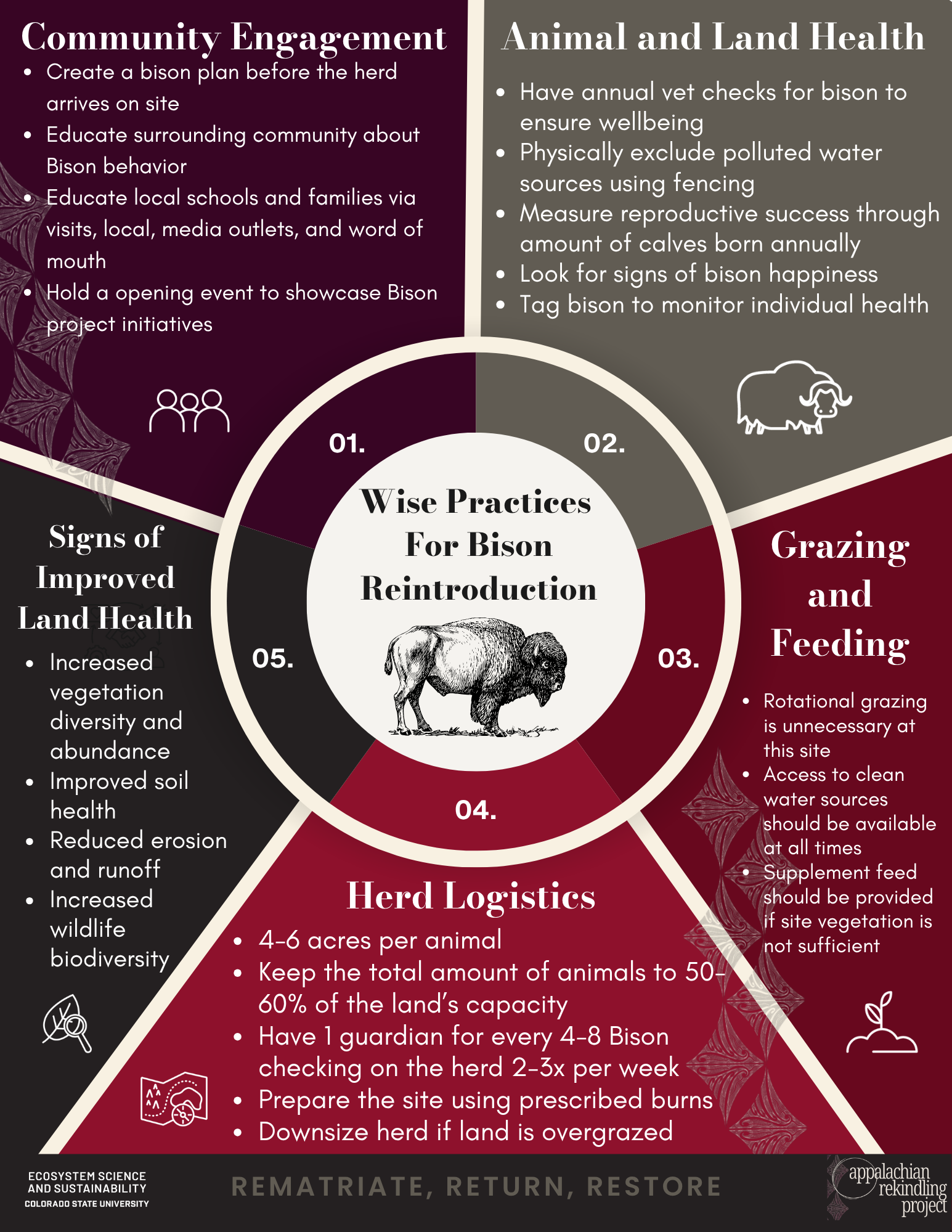
Infographic created by the Indigenous Data Sovereignty, Governance & Ethical Spaces group
The Appalachian Rekindling Project’s mission of Indigenous-led land care and restoration in Appalachian states reflects important aspects of Mountain Sentinels’ own mission: to learn and support the transformations and adaptation pathways needed to sustain mountain regions worldwide.
Pyette expressed the positive experience she had with these students, and the enthusiasm and dedication shown in their presentation was a reflection of this. She said that ARP’s work feels especially important right now for many reasons. “Growing up, I thought that I had to wait for permission to take care of my homelands,” said Pyette. “I don’t believe we have to wait anymore. Regardless of what public opinion is or political opinion is, we have an obligation to the places we live.”