

Leer esta publicación en español.
Today, on International Mountain Day and in the spirit of this UN International Year of Glaciers’ Preservation, we are excited to share a short video from our latest Moving Mountains Summit. Mountain Sentinels, Peruvian NGO Instituto de Montaña, and community-based group ABA Ayacucho co-hosted Hatun Tinkuy, an international dialogue between academics, practitioners, educators, students, community knowledge holders, and Indigenous rights-holders in December 2024. We were honored to welcome 72 individuals from ten countries and over eleven Andean communities from across the region to Huaraz, Peru. The meeting venue boasted a stunning view of the glaciers of the Cordillera Blanca mountains as the group built relationships with each other while sharing knowledge, ideas, and approaches to community resilience to climate threats.
Watch this short video to capture highlights of the Hatun Tinkuy.
Participants spent a day at Huascarán National Park for land-based learning and interaction with glacial landscapes. The group visited a reforstation project and a site for bioremediation of contamination exposed by retreating glaciers, and some of the participants hiked to the shrinking but still mighty Urushraju glacier, visiting experimental plots to vegetate the newly exposed ground.
One year later, Andean communities continue to develop community-driven actions to increase climate resilience and advocate for glacial preservation. On this International Mountain Day, we reflect on how we can move forward to support the Indigenous knowledge holders and community leaders who are such vital guardians of the glaciers that benefit the whole world, and revisit some of the most important lessons learned at the Hatun Tinkuy.
1. Glacier loss is an existential threat.
Glacial meltwater provides water for humans and livestock, watering crops, and more. It’s also part of some communities’ cultural identity. To many, glacier retreat is seen in terms of life and death: if the water dies, we die with it.

Mountain Sentinels Fellow Kelly Caichihua Castro and cinematographer Brandon Luciano Loli pose on the hike up to the Urushraju glacier. Photo credit: Rowena Davis
2. Emotional, spiritual, and cultural relationships with glaciers are central to resilience.
In addition to threatening the livelihoods of communities near and far, glacier loss is emotionally devastating and culturally destabilizing. Glaciers are not only water sources but living relatives and spiritual anchors to Andean communities. Without them, more than just water is lost.
3. Indigenous communities are building climate-resilient local economies that are rooted in ancestral knowledge.
Organic crop production, native-plant medicines (such as pentka “honey”), wildlife conservancies, and collective associations crisscross the Andes and help to build local resilience. These economies aim to reduce dependency on extractive industries, provide livelihoods to the next generation and retain the younger members of these communities, and strengthen their ability to adapt and change as glaciers diminish.
4. Communities are reviving ancestral water-seeding systems that rebuild hydrology.
In the face of glacier recession, Indigenous engineering is focused on “seeding and harvesting water” as a strategy to improve climate resilience. The restoration of ancient dykes, ponds, wetlands, and springs demonstrates that such engineering can restore groundwater, increase streamflow, and regenerate ecosystems.
5. Glacial melt now exposes toxic heavy metals, creating new risks that require blended knowledge to address.
As glaciers recede, copper and manganese leach into rivers and acidify their water. Communities use plant-based bioremediation to combat these effects, but the scale is small relative to the problem. This issue highlights the need for collaboration between Indigenous knowledge holders, scientists, and NGOs to address this and other emerging hazards related to glacier recession.
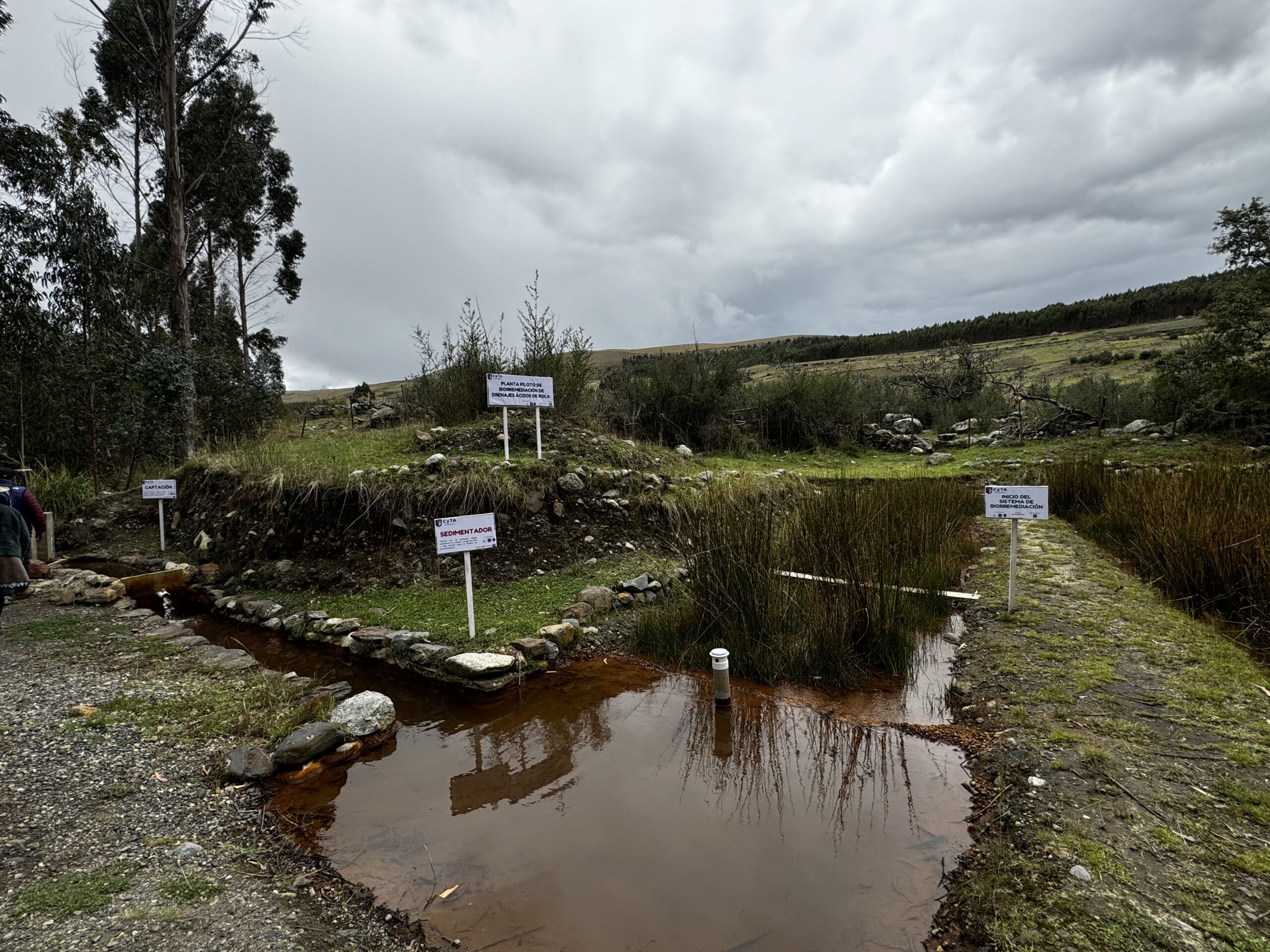
Community bioremediation site to treat water contaminated by heavy metals in the soil exposed by glacial retreat. Photo credit: Catherine Tucker
6. Mining and water privatization pose major obstacles to climate resilience.
Many communities report that mining destroys forests, contaminates water, accelerates glacier hazards, and threatens traditional livelihoods. Privatization of both mining and water also threatens local control of water resources, thereby undermining the ability of local people to respond to the loss of glaciers.
7. Ecological rights are part of a critical framework for climate adaptation.
Communities in Peru are developing municipal-level ecological rights, which entails recognizing water and nature as having legal rights. This provides a governance structure to defend glaciers, wetlands, and rivers from mining, pollution, and privatization.
8. Climate resilience requires long-term, trust-based alliances with scientists, not extractive research.
Communities ask researchers to identify with and include the community in their work, including co-designing research and staying in the region over the long term. Knowledge exchange must also be reciprocal, accessible, and shared in the languages of the community in order to truly support adaptive strategies for glacier loss and water scarcity.
9. Indigenous data sovereignty is essential for protecting sensitive knowledge and guiding adaptation.
Traditional ecological knowledge – often embedded in stories, prayers, and practices – is a form of data. The summit emphasized the CARE principles (Collective benefit, Authority to control, Responsibility, and Ethics), Indigenous governance of research, and community rights over how glacial, water, and environmental information is collected and used.
10. Resilience requires strengthening youth engagement to prevent cultural and ecological loss.
Youth are leaving rural areas, risking the disappearance of knowledge tied to glaciers, water cycles, and land stewardship. Mountain youth must be central in learning ancestral practices, monitoring climate change, and shaping future economies.
11. Trans-Andean and global Indigenous networks are vital for climate action.
Participants from Peru, Kenya, Canada, Ecuador, the Yukon, and Native communities in North America emphasized shared struggles with water loss, glacier decline, and colonial disruption. The emerging Knowledge Dialogue Network aims to unify these voices to protect mountain ecosystems around the world.